ორნამენტებიანი და ბერძნულწარწერებიანი კვარცხლბეკი კაზრეთიდან
სავედრებელი · Oration
კრიტიკული გამოცემა · Interpretive Edition
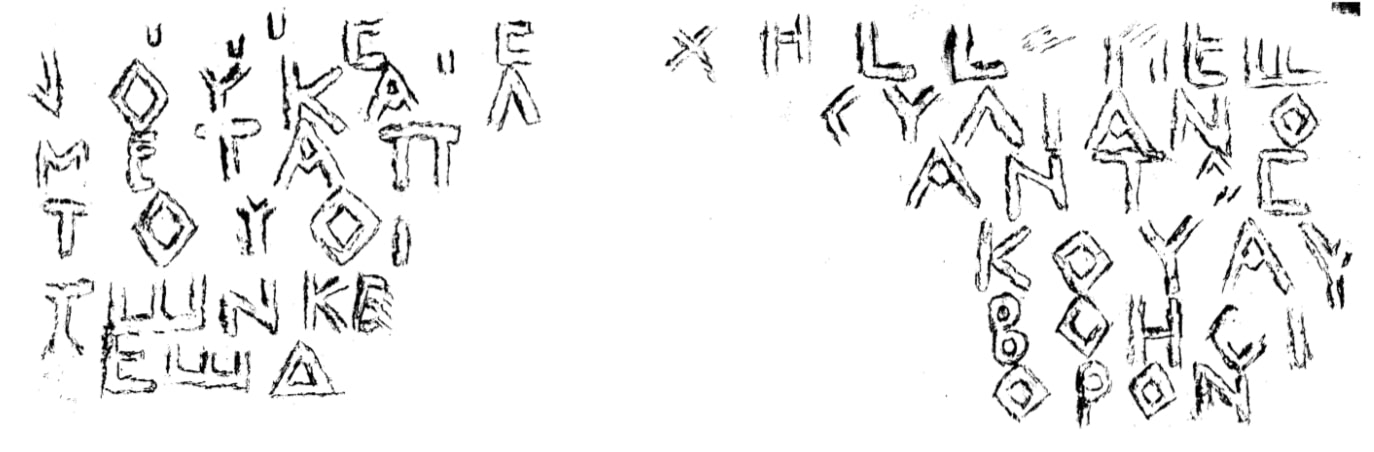
დიპლომატიური გამოცემა · Diplomatic Edition
ქართული
ქ. სალოცველად სიმეონისა და ავლიანოსისა ყოვლითა მათითა სახლითურთ. უფალო, შეეწიე თეოდორეს.
English
Ch. By praying for Simeon and Avlianos and their household. God, have mercy on Theolores.
პალეოგრაფიული მონაცემებით (α ჩატეხილი შუა ხაზით, π – გაგრძელებული ჰოტიზონტალური შტრიხით, კუთხოვანი ასოებით Ε, Ш) და ენობრივი თავისებურებებით (იტაციზმი; ο||ω–ს მონაცვლეობა; βοήθει ზმნასთან დამატება accusativus–ში) წარწერა V-VIII სს–ით AD თარიღდება. შეიძლება თარიღის მეტი დაზუსტება – VI-VII სს–ით. ხელოვნებათმცოდნეთა აზრით, ძეგლი ჯვრებისა და ორნამენტების მიხედვით მთლიანად V ს–ისაა (ვ. ჯაფარიძე); არის აზრი, რომ ბოლნური ჯვრები V-VI ს–ისაა, ხოლო წარწერიანი წახნაგები მოგრძო ჯვრებითა და ჩუქურთმიანი კამარებით VIII-IX სს–ისა (ვ. დოლიძე). სხვა წყაროებით უცნობ პირებს, სიმეონსა და ავლიანეს რაღაცა დამსახურებისათვის თავისი და თავისი სახლის, ოჯახის სალოცველად აღუმართავთ ეს სტელა, ხოლო თეოდორე, ამ სტელის გამკეთებელი, ხელოვანი, თუ ოსტატი უფალს შეწევნას სთხოვს.
According to the paleographic data ( α with broken crossbar, π - with horizontal line, square shape Ε, Ш) and linguistic characteristics (itacism, interchangeable ο||ω, βοήθει added to the verb in accusativus) the inscription can be dated to V-VIII AD. We can give a more precise date - VI-VII. According to the art historians the monument is V century (V. Japaridze); it is also considered that the Bolnisi Crosses are from the V-VI century, the side-facade inscriptions and oval shape crosses and ornamented arches are VIII-IX century (V. Dolidze). According to the other sources, Simeon and Avlianos as a sign of some achievement had erected this stele as a place for prayers for their house and family members, while Theodorus the craftsman of the stele and master is asking for the mercy from God.
<div xmlns="http://www.tei-c.org/ns/1.0" type="edition" xml:lang="grc" xml:space="preserve">

                        <!-- † ὑπὲρ ε[ὐ]χῆς Συμεώ
		                        νου καὶ Ἀουλιανοῦ
		                        μετὰ παντὸς
		                        τοῦ οἴκου αὐ
	                            τῶν. κ[ύρι]ε, βοήθει
		                        Θεώδορον


                                                                         -->

         <ab>
             <lb n="1"/><g type="cross">✝</g><w lemma="ὑπέρ">ὑπὲρ</w> <w lemma="εὐχή">ε<supplied reason="lost">ὐ</supplied>χῆς</w> <persName type="local" key="სიმეონი (Συμεῶν)"><name nymRef="Συμεῶν">Συμεώ
             <lb n="2" break="no"/> νου</name></persName> καὶ <persName type="local" key="ავლიანოსი (Ἀουλιανός)"><name nymRef="Ἀουλιανός">Ἀουλιανοῦ</name></persName>
             <lb n="3"/> <w lemma="μετά">μετὰ</w> <w lemma="πᾶς">παντὸς</w>
             <lb n="4"/> <w lemma="ὁ">τοῦ</w> <w lemma="οἶκος">οἴκου</w> <w lemma="αὐτοί">αὐ
             <lb n="5" break="no"/> τῶν</w>. <w lemma="κύριος"><expan><abbr>κ</abbr><ex>ύρι</ex><abbr>ε</abbr></expan></w>, <w lemma="βοηθῶ">βοήθ<choice><reg>ει</reg><orig>ι</orig></choice></w>
             <lb n="6"/> <persName type="local" key="თეოდოროსი (Θεώδορος)"><name nymRef="Θεώδορος">Θεώδορον</name></persName>
          </ab>


            </div>